




- This event has passed.
Sugden Institute: Inaugural Gill Oration
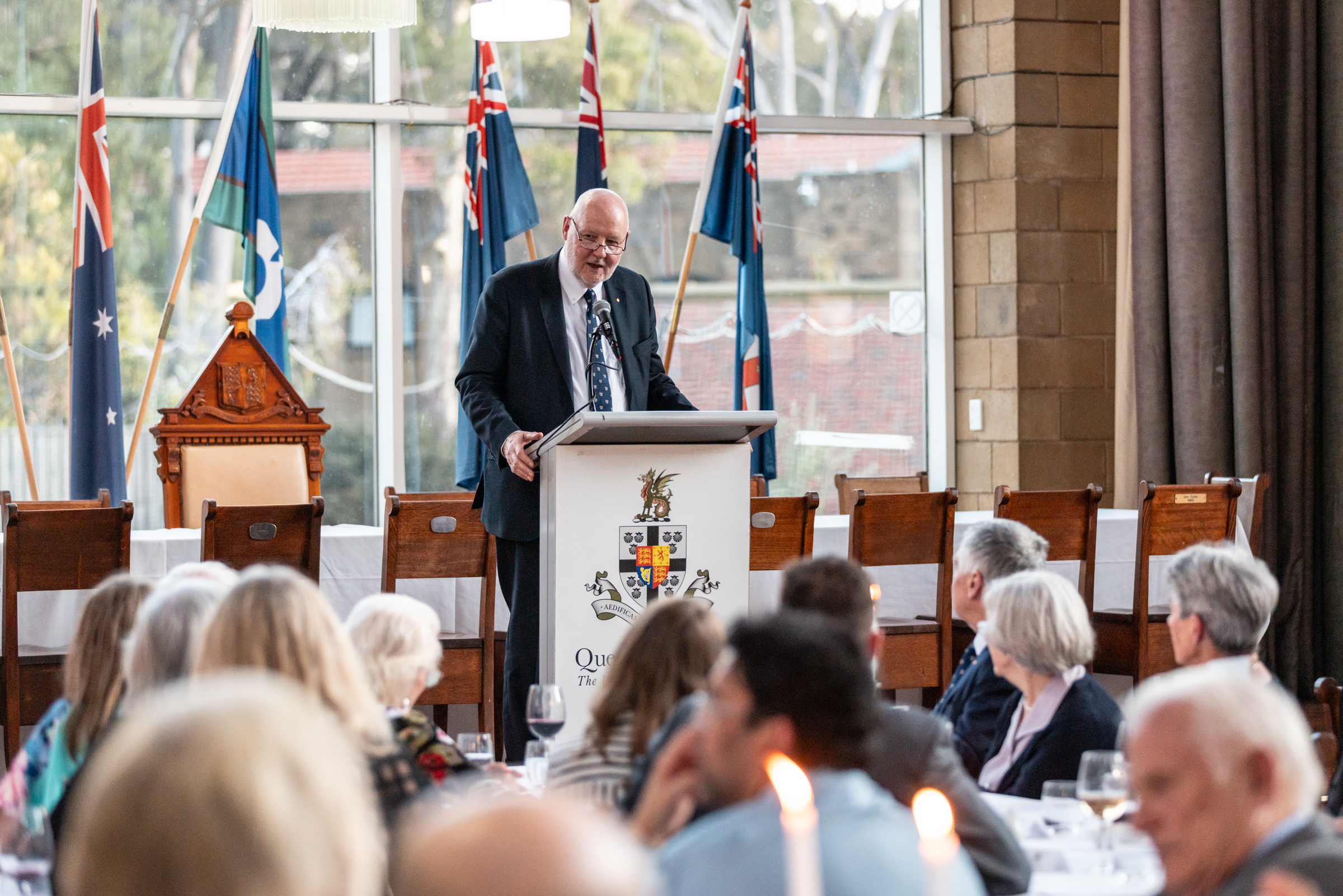
Join the Master and Head of College, Dr Michael Stepniak, and Queen’s College as we launch the Inaugural Gill Oration in recognition of the remarkable contribution of Dr Stewart Gill OAM to education and Queen’s College.
Dr Stewart Gill OAM
presents
The Getting of Wisdom:
An Education for Life, Not Just for Livelihood
Tuesday, 1 September 2026
5:30 PM – Drinks | 6:00 PM – Oration
Junior Common Room, Queen’s College
Drinks and canapés will follow the Oration.
No onsite parking: Taxis and public transport recommended.
About Dr Stewart Gill OAM
Dr Stewart Gill OAM is an Honorary Senior Fellow in the School of Historical and Philosophical Studies (SHAPS), University of Melbourne, and he served as the eighth Master of Queen’s College.
He has had a distinguished career in collegiate leadership and education. Prior to Queen’s, Dr Gill served as the Principal of Emmanuel College, University of Queensland. He was also Founder and Director of the Emmanuel Centre for the Study of Science, Religion and Society. Later, he was appointed Adjunct Professor in the School of Historical and Philosophical Inquiry. Dr Gill continued his contribution to collegiate life in Melbourne as the Warden of Ridley College and the Deputy Warden of Trinity College.
In retirement, he remains active in the education and not-for-profit sectors. He serves on several boards and is the Australian Ambassador for the Association of Commonwealth Universities.
Synopsis:
“The Getting of Wisdom”: An Education for Life, Not Just for Livelihood
The title of this talk is taken from the 1910 coming-of-age novel, ‘The Getting of Wisdom’, by Henry Handel Richardson, the pseudonym of Ethel Florence Lindesay Richardson. While the book deals with the journey of a young woman from rural Victoria to a Melbourne boarding school in the late nineteenth century. Its title points to a debate that runs through the history of education.
This talk will reflect on “the getting of wisdom” and the role that a college can play in a university system that is often being increasingly aligned with preparing students solely for livelihood and future vocation over critical and creative thinking.
The case will be argued for the important role that residential communities can play in the creation of spaces for critical inquiry, ethical development and personal resilience to help equip students for the complexities of life and to contribute to the communities in which they will live and serve.